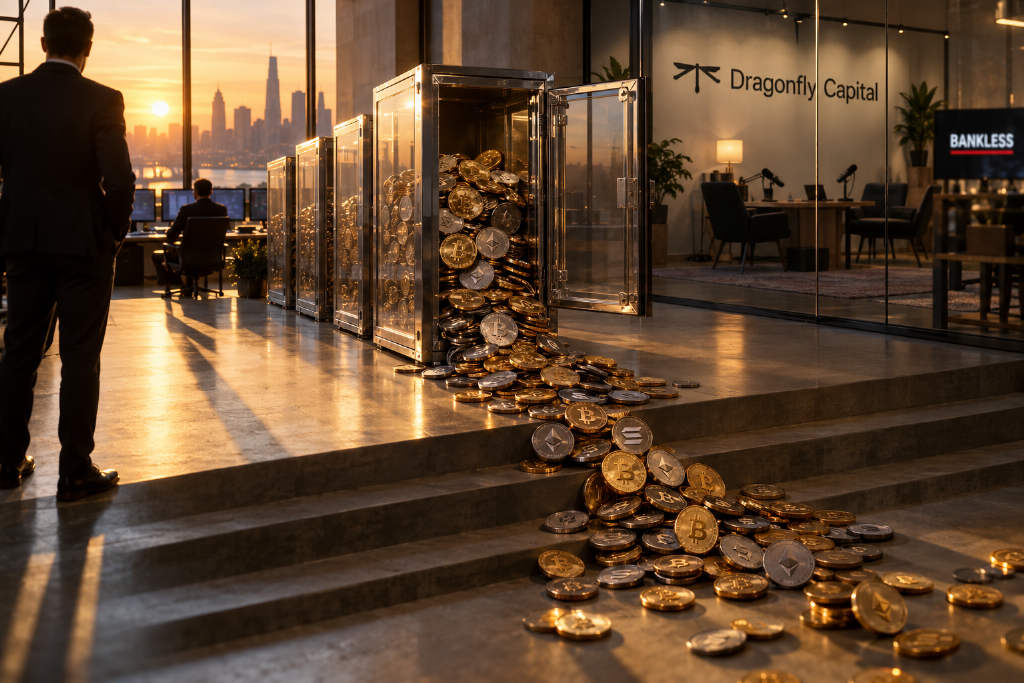
Dragonfly Cap2026-10-04 04:05:55Dragonfly Capital partner says ongoing token unlocks are eroding confidenceDragonfly Capital managing partner Haseeb Qureshi said ongoing token unlocks are hurting market confidence in some tokens, according to comments he made during an Aug. 28 interview with Bankless. He said many projects are dealing with persistent selling pressure tied to multi-year unlock schedules, with tokens released over time continuing to hit the market. Qureshi said some strategic investors sell as soon as they receive tokens. Over a four-year vesting period, each tranche of unlocked tokens may be sold, he said. In his view, that repeated pattern makes it harder for secondary market investors to step in and can leave traders with the impression that certain token prices only move lower rather than higher.20
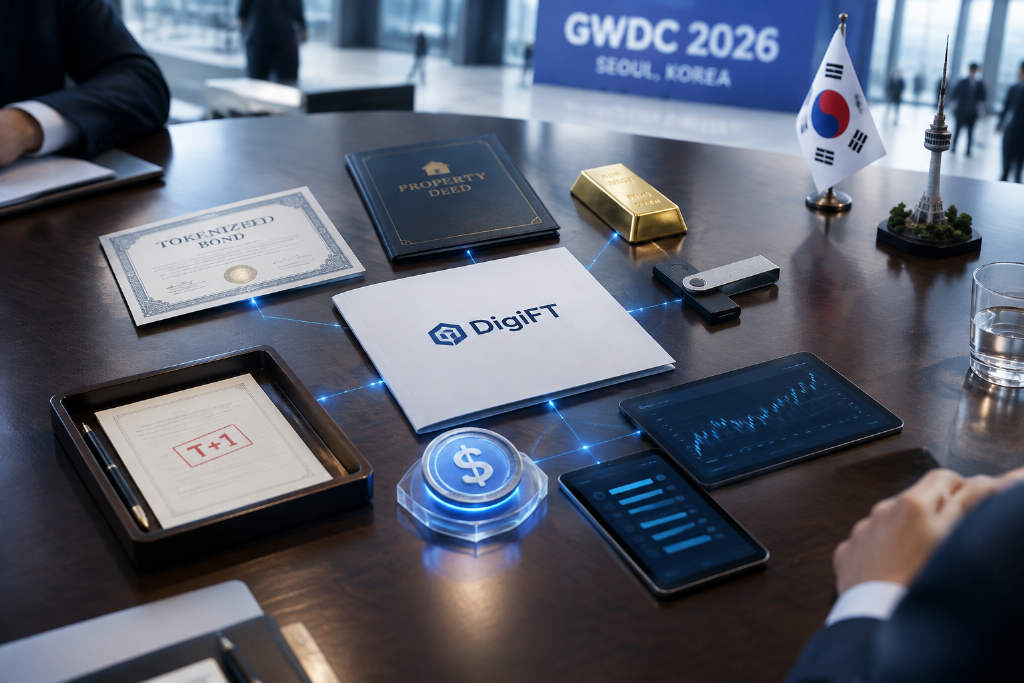
DigiFT2026-09-29 07:34:40DigiFT executive says RWA secondary trading is still early, and tokenization alone does not change T+1DigiFT Chief Growth Officer Ryan said at a panel during GWDC 2026 Korea that the real-world asset, or RWA, market is still in the early stages when it comes to secondary trading. She broke the sector into four stages: tokenization, distribution, secondary markets, and use cases. In her view, tokenization is only a technical task, while distribution is a regulated activity, and the secondary market remains underdeveloped because the primary market is still being built out. Ryan also argued that moving traditional assets onto blockchain rails by itself does not change their settlement structure. If an asset settles on T+1 in traditional finance, it remains T+1 after being put on-chain. She said instant trading and composability require an on-chain secondary market paired with stablecoins. On institutional adoption, Ryan said large firms need clear legal opinions before allocating capital to DeFi protocols, unless the protocol itself holds a license. She added that DigiFT, founded in 2021, entered Singapore’s fintech regulatory sandbox and obtained a license about two years later. According to Ryan, regulators tend to start with small pilot programs, and responding to public consultation papers is also an important way to engage.130
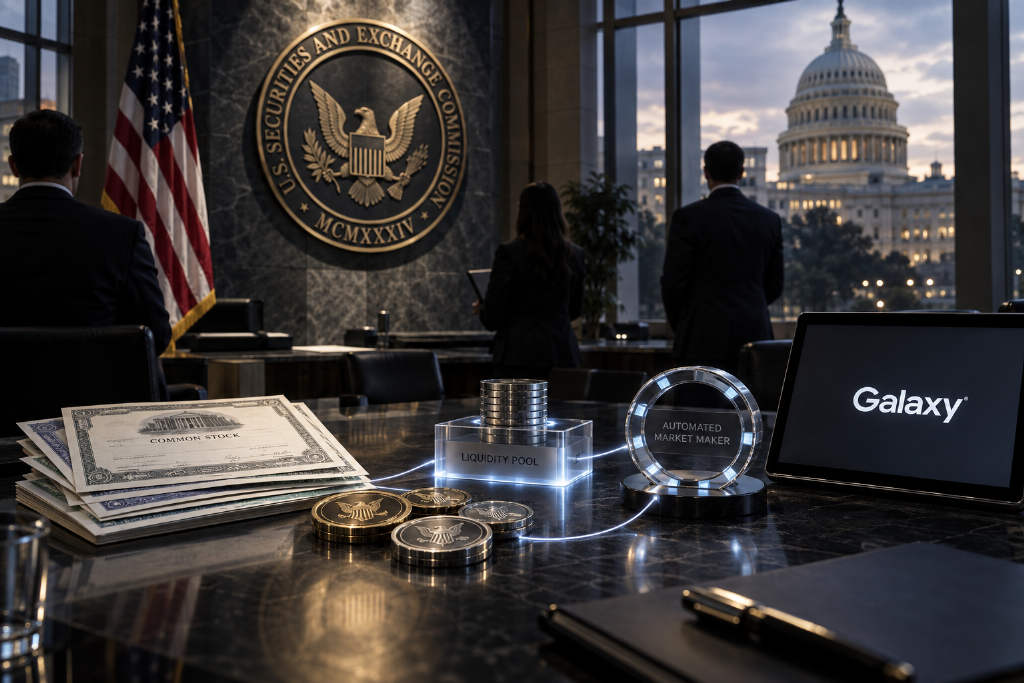
SEC2026-09-19 14:06:48SEC issues innovation exemption for on-chain secondary trading of tokenized stocksThe U.S. Securities and Exchange Commission has issued an "innovation exemption" that creates a route for on-chain secondary trading in tokenized equities. The exemption is set to run from Sept. 17, 2026, through Sept. 17, 2031, and applies to certain tokenized securities trading venues that offer permissioned automated market makers and liquidity pools. Those venues must operate on public, permissionless blockchains, while trading itself is limited to verified or otherwise authorized participants. Eligible tokens must represent actual U.S. National Market System stocks and carry the same shareholder rights as traditional shares. The exemption does not cover primary issuance, synthetic exposure, or products that do not provide legal or beneficial rights in the underlying stock. Galaxy said it is studying the next steps to enable on-chain secondary trading for GLXY.290
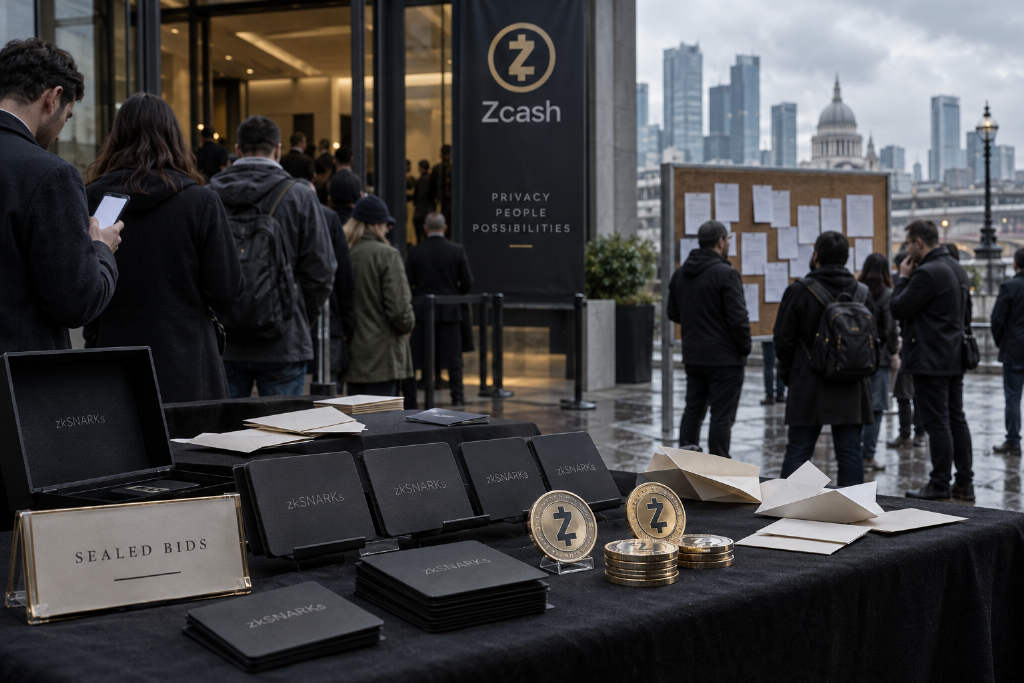
ZEC2026-09-18 01:25:46zkSNARKs auction closes at 1.5 ZEC clearing price after 16,971 bidsThe zkSNARKs NFT project in the ZEC ecosystem said its auction has concluded, with 16,971 bids submitted and 8,000 NFTs allocated. The final clearing price was set at 1.5 ZEC. According to the project, the sale used a uniform-price sealed-bid format: bids were ranked from highest to lowest, the top 8,000 bids won allocations, and unsuccessful bidders will receive full refunds. The team also said secondary market trading will open tomorrow and refunds will be processed within 24 hours. On the same day, @LeonidasNFT, described in the source as a well-known builder from the Bitcoin inscriptions era, publicly accused the zkSNARKs team of being serial entrepreneurs from the Ordinals sector and said many of their past projects were scams.410
primary marke2026-09-06 04:07:11Hard-tech mania in private markets meets sharp reversals in public tradingA commentary published by MarsBit sketches a widening split between China’s primary and secondary capital markets, using hard-tech projects and recent IPOs to show how money is being priced very differently across the two. The piece starts with a world-model startup that, according to the author, went from being a difficult, low-monetization AI bet last year to one of the hottest fundraising stories this year, with capital chasing anything tied to simulations of the physical world. The author says the project raised billions of yuan within half a year and is already discussing a new round at a valuation approaching the high hundreds of billions, a sign of intense fear of missing out in private markets. The article then broadens to listed names and the IPO queue. It cites Qingke Research data showing 5,944 equity investment cases in China in the first half of 2026, up 14.7% year over year, with total investment reaching about 565.4 billion yuan, up 31.9%. Yet, by the author’s account, roughly 90% of first-market money this year has concentrated in AI, robotics, world models, quantum technology, controllable nuclear fusion, integrated circuits and commercial aerospace. On the public-market side, several hard-tech listings are described as peaking at the open and then retreating quickly, including Unitree and Pinzhun Laser, while ChangXin Technology is presented as a contrasting case backed by much stronger earnings and lower valuation multiples. The article frames the gap as a test of how much hard-tech issuance public markets can absorb and whether “patient capital” is being practiced or merely invoked.940
SEC2026-08-26 13:50:56SEC crypto asset proposal seen as unlikely to spark another ICO boomThe U.S. Securities and Exchange Commission’s proposed "Regulation Crypto Assets," released on Aug. 18, would create two exemptions for certain investment contracts tied to crypto assets, opening defined fundraising channels for token issuers in the United States. One exemption would let startups raise up to $5 million in a single offering over four years, while another would allow eligible issuers to raise as much as $75 million in any 12-month period, with the possibility of conducting separate offerings in later years. Lawyers and regulatory specialists quoted in the report said the framework is more structured than the market environment seen during the 2017 ICO cycle. Winston & Strawn partner Drew Hinkes said a project could theoretically raise $75 million every 12 months if each round is genuinely independent. Sidley fintech and blockchain practice head Lilya Tessler, however, said follow-on fundraising would not be automatic: issuers would need to refile offering materials, undergo SEC staff review, and continue filing annual and semiannual reports. The proposal would also cap participation by non-accredited investors at 10% of the greater of annual income or net worth. Duke University financial regulation expert Lee Reiners said the limited first-round cap could make early token allocations more attractive, but he does not expect a return to the ICO frenzy of 2017, noting that as many as 90% of projects that raised through ICOs from 2017 to 2019 ultimately failed. The SEC estimates about 130 offerings a year would use the two exemptions, while roughly 475 issuers could rely on a broader investment contract safe harbor.890
Blockchain As2026-08-25 04:11:21Blockchain Association backs stablecoin identity checks, seeks P2P secondary transfer exemptionThe Blockchain Association said it supports federal-level identity check rules for stablecoins, while urging regulators not to apply those requirements to person-to-person transfers in secondary markets. The group argued that extending identity verification obligations to P2P transfers would create unnecessary compliance burdens for users and market participants. It also said such a move could hold back innovation. The position was cited by Techub News, with Crypto.news named as the source in the brief. No additional details on a specific proposal, agency, or timeline were provided in the item.880
MEXC Ventures2026-08-25 03:11:58MEXC Ventures Holds Day 3 Helicopter Trip and Closing Gathering at CoinFest 2026 in BaliMEXC Ventures held its Day 3 Helicopter Trip and Closing Gathering in Bali on Aug. 21 during CoinFest 2026, according to ChainCatcher. The event brought together 32 KOLs and industry guests for an approximately 50-minute helicopter ride overlooking Bali’s southern coastline and the CoinFest main venue. Later in the day, 100 contestants, partners, and industry participants attended the closing gathering. During the MEXC Alpha Insights session, MEXC CEO Vugar and MEXC Product Director Vivien shared their observations on structural opportunities in the primary and secondary markets and outlined the strategic direction of MEXC Ventures for the coming quarters. The organizer said the event was designed to create a setting for CoinFest participants to exchange industry views and build collaborative ties.1010